


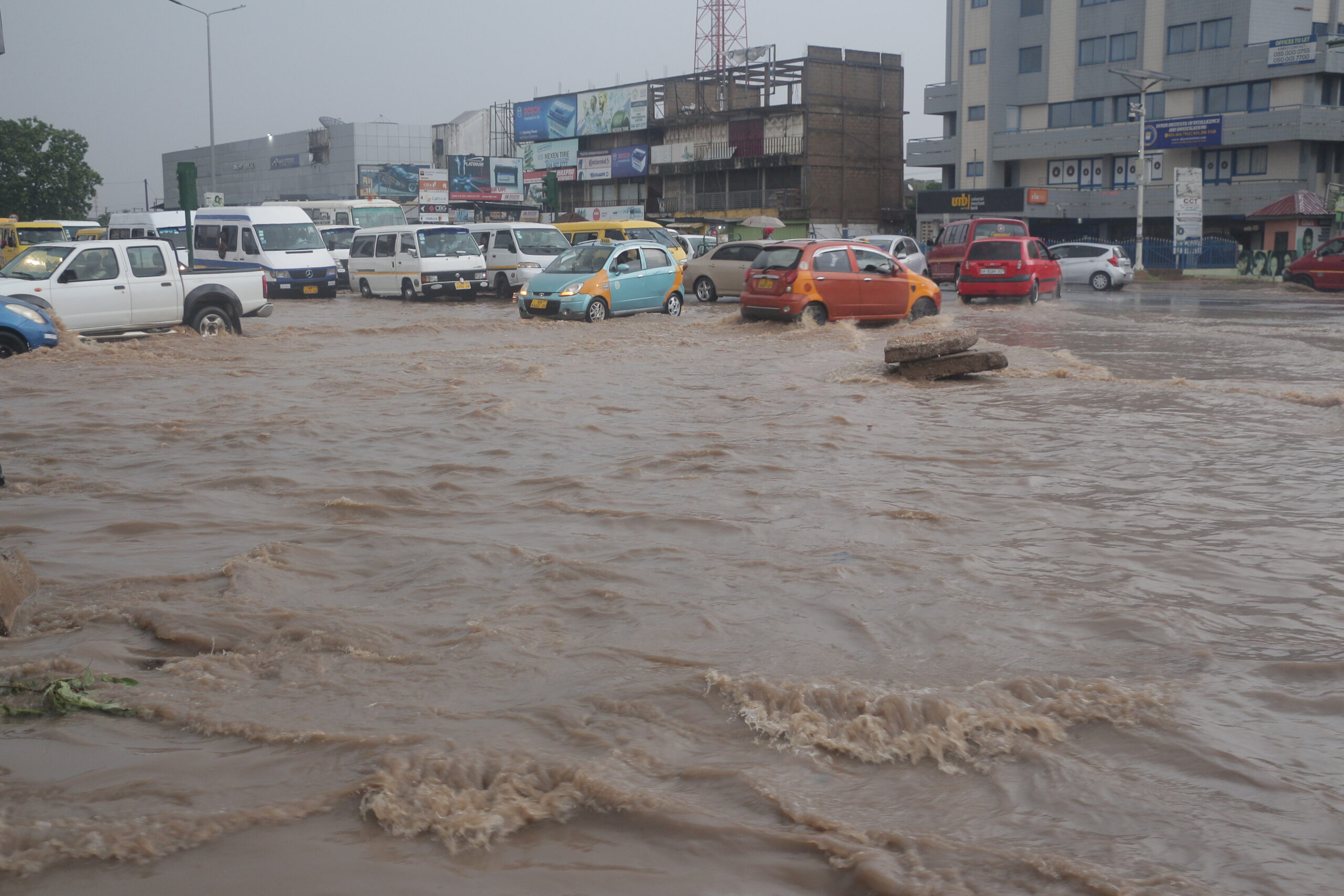
Flooding has become one of Ghana’s most persistent environmental and public safety challenges, particularly during the rainy seasons.
In recent years, even the slightest drop of rain can lead to flooding in some areas.
Major cities such as Accra, Kumasi and Takoradi are frequently affected, with disruption to transport, damage to property and, in some cases, loss of life.
The situation is especially severe in Accra.
According to disaster management authorities, flooding causes significant economic losses in Ghana each year.
In Accra, rapid urbanisation has placed increasing pressure on drainage systems. Intense rainfall can overwhelm waterways within hours.
Experts cite poor drainage infrastructure, unplanned settlements and the dumping of waste into gutters as key factors worsening the problem.
One of the most devastating flood-related disasters in Ghana’s recent history occurred on 3 June 2015, when severe flooding coincided with an explosion at a fuel station in Accra.
More than 150 people were killed, underscoring the deadly consequences of inadequate urban planning and disaster preparedness.
The government and local authorities have introduced initiatives aimed at improving drainage systems, desilting gutters and educating the public on proper waste disposal.
However, experts say long-term solutions will require stricter enforcement of building regulations and more effective urban planning.
Key facts about flooding in Ghana
Flooding occurs most frequently during the major rainy season, typically between April and July.
Accra is among the most flood-prone cities due to its low-lying coastal location and rapid urban growth.
Blocked drains, often caused by improper waste disposal, are a major contributor to urban flooding.
The 2015 Accra flood and fuel station explosion claimed more than 150 lives.
Flooding increases the risk of waterborne diseases such as cholera and typhoid due to contaminated water supplies.
Safety precautions
Before flooding
Monitor weather forecasts and official warnings.
Keep drains and gutters around homes clear of waste.
Store important documents in waterproof containers.
Prepare an emergency kit with drinking water, food, medication and a torch.
During flooding
Move immediately to higher ground if water levels begin to rise.
Avoid walking, swimming or driving through floodwaters.
Switch off electricity and gas supplies if it is safe to do so.
Follow instructions from emergency services and local authorities.
After flooding
Do not return to affected areas until authorities declare them safe.
Avoid contact with stagnant water, which may be contaminated.
Drink only treated or boiled water.
Check buildings for structural damage before entering.
Seek medical attention if you develop symptoms of illness after exposure to floodwater.
As Ghana continues to urbanise, experts warn that tackling flooding will require coordinated action from government agencies, city planners and residents. Without significant improvements in drainage management and waste disposal, many communities are likely to remain vulnerable to seasonal flooding in the years ahead.